

If you wanted to go Christmas shopping on Maryland’s Eastern Shore back in 1756, you would have headed if at all possible to Oxford, Md. For variety and quantity of merchandise, that then-bustling Tred Avon River port in Talbot County had no equal on the shore. Not even Chestertown compared at that point.
What might be on your list? Are you thinking your list would be short because nothing much was available in the 1750s? Think again. A businessman named Henry Callister made a detailed inventory of goods available in Oxford’s “Cunliffe” store in the fall of 1756.
Are you ready? Take a deep breath. Here goes:
FABRICS & SEWING
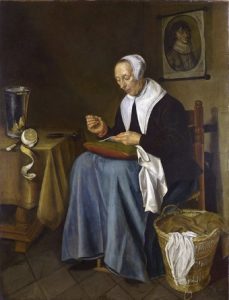
Fabrics includes chintz, calico, lawn (striped and plain), muslin (striped and plain), gingham, silks, minionett, Indian and Persian cloth, blue cloth, cambric, serge, velvet, plush, crepe, dimity, blue and white dove cloth, Irish linen and sheeting, Holland cloth, diaper cloth (a weaving style, not an infant item), German and Irish ozenbrigs, Manchester checks, frieze, sail canvas, bed ticking, seven different types of broadcloths, alapans, barres, stunts, duroc, sagathy, fearnought, shallots, swanskin (a thick flannel), bearskin (yes, from bears), cheverels.
Conclusion from historian Dickson Preston: “No doubt milady of 1756 knew exactly what [all] these were and what they were used for, but this writer doesn’t.”
OTHER SEWING-RELATED ITEMS
• Buttons of all types (including gold and silver)
• Silk “frogs,” which were kind of like buttons
• Bandana and Barcelona handkerchiefs
• Various ribbons and twists of hair, mohair, and silk
• Needles, threads, and thimbles
• Whalebone hoops (for dressmaking)
CLOTHING
• Silk bonnets, shoes, caps, and cloaks
• Boys shoes, pumps, clogs, and galotias (galoshes, possibly?)
• Velvet masks
• Mourning fans (colored black for use at funerals, etc.)
• Mourning shoes
• Red-striped waistcoats
• White ruffled shirts
• Silk hose for men
• Cotton hose for women (they were not allowed to use silk hose)
• Men’s garters (women did not use garters then)
 STATIONERY AND BOOKS
• Bibles, prayer books
• Testaments, yearbooks, horn books (a children’s alphabet primer)
• Dictionaries, the works of Erasmus, and a variety of mariner’s how-to books
SPICES AND CONDIMENTS
• Black pepper, pimiento, indigo, saltpeter, mace, cloves, cinnamon, whole nutmegs, brimstone, lump sugar
MISCELLANY
• Boxes of medicine
• Spectacles and cases
• Ivory combs
• Horsehair brooms
• Curtain rings
• Looking glasses (mirrors)
• Pewter buckles
• Knee buckles
• Men’s and women’s gloves, including Turkish, black, glazed, colored, worsted, and leather varieties.
SADDLERY
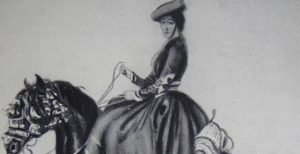
• Women’s saddles
• Hunting saddles
• Saddle cloths
• Bridles
• Curbs
• Whips
FISHING
Fish hooks for perch
Fish hooks for drum
Finishing line for drum, sheepshead, rock, and perch
 HOUSEHOLD
• Steel plates
• Tin plates
• Draw knives
• Ivory-handles knives and forks
• Sharp cutting knives
• Punchbowls and teapots
• Pewter dishes, basins, plates, spoons, pots, and mustards
• Dripping pans, kettles, and iron pots
• Garden shears
• Hinges
• Brass escutcheons and cupboard locks and padlocks
• Candle snuffers and nippers
• Nails, hooks, and screws
• Saws, files, chisels, augers, sheep shears, butchers’ cleavers, gimlets, shop tools
• Sash moles, shoemakers’ jacks, hones (a type of whetstone), bullet and marking irons
• Latches and catches
• Carpenters’ compasses
• Window bolts
• Ropes, lumber, corks, and pipes
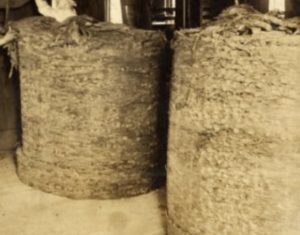
Hogsheads of tobacco
BULK ITEMS
• Bar iron
• Tallow paints
• Feathers
• Barrels of pork
• Barrels of ships’ bread (or hardtack)
• white- and red-oak planking
• Pipe and barrel staves
• Booms
• Bushels of salt
• Bushels of wheat
• Hogsheads of tobacco
Conclusion from that same historian, Dickson Preston:
“Milady of Oxford in 1756 and her husband … were far from living in provincial backwardness; they had a tremendous variety of goods from all over the world from which to choose and could live like English country squires and ladies if they could afford it.”
–posted by Jim Duffy for Whimbrel Creations LLC/Secrets of the Eastern Shore in December 2025.
NOTES:
• The book this info comes from is Dickson Preston’s “Oxford: The First Three Centuries.” It should be available at good bookstores in the Talbot County area, either in a potentially pricey first edition or in a more recent reprint.
• The image up top here depicts the Christmas season a few decades after the period I’m talking about–it’s a painting by Jean Leon Gerome Ferris titled “The Christmas Coach 1795.”
• If you want to go Christmas shopping in our modern times, you might find some interesting books and beautiful photography right here on this very site.


